FTA announces Corporate Tax Registration Deadline – 90 days from Date of Incorporation/MOA. AED 10k penalty for late registration.
FTA announces Corporate Tax Registration Deadline – 90 days from Date of Incorporation/MOA. AED 10k penalty for late registration.
FTA announces Corporate Tax Registration Deadline – 90 days from Date of Incorporation/MOA. AED 10k penalty for late registration.

UAE E-Invoicing in the United Arab Emirates refers to the electronic creation, exchange, and reporting of invoices in a structured digital format instead of traditional paper or PDF invoices.The UAE is implementing a mandatory electronic invoicing (eInvoicing) system, starting with a pilot phase on July 1, 2026, to streamline tax compliance and digitalize business transactions.
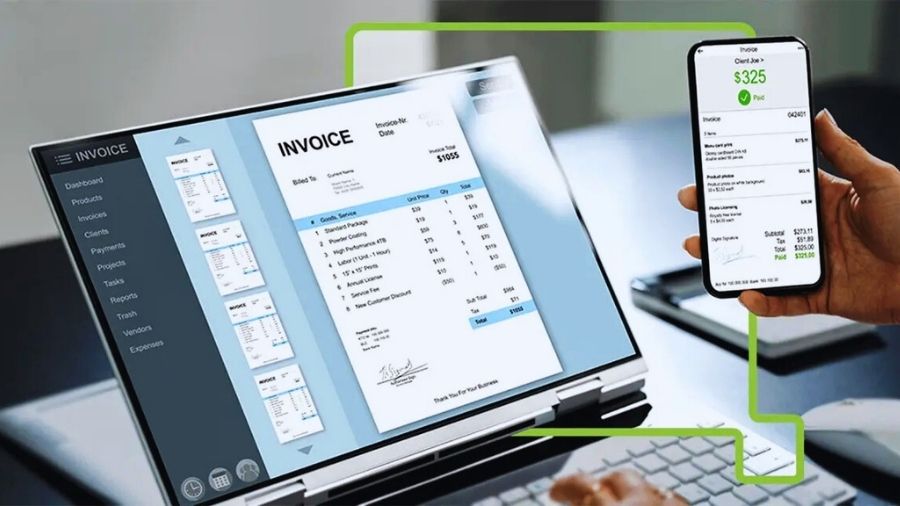
UAE create an invoice on a computer and then email it out as a PDF to their customers. However, according to the new FTA e-invoicing regulations, PDFs will no longer be acceptable. The government will require that a file exists as “Structured Data” (basically, an XML file), which can then be read and validated by computer systems.

1. The Seller – You make an invoice in your accounting software.
2. Your Service Provider (ASP) – An Accredited Service Provider (like a digital bridge) takes your data and shifts it into the official UAE format.
3. The Government Platform – The data is shared with the Federal Tax Authority (FTA) almost in real-time.
4. The Buyer’s Service Provider – Your client’s system receives the data.
5. The Buyer – Your client sees the invoice in their system, prepared for payment.
The FTA and the Ministry of Finance have planned a phased implementation to allow businesses time to prepare. Below is the schedule that you should note in your calendars –
1. The Pilot Stage (July 2026)
This is the “trial run” phase, where eligible taxpayers (Taxpayer Working Group) will be invited by the government to begin using the electronic system.
2. Phase 1 – Large Enterprises
The first major deadline for compliance will occur in January 2027.
3. July 1, 2027 – Phase 2 (All Other Businesses)
The mandate for Phase 2 extends to the rest of the Company Community.
4. October 1, 2027 – Phase 3 (Government Entities)
The purpose of Phase 3 is to complete the Digital and Transparent Transaction Requirements of All Government Transactions.
| Phase | Category | Deadline to Appoint ASP | Mandatory Go-Live Date |
| Pilot | Selected/Voluntary | Flexible | July 1, 2026 |
| Phase 1 | Revenue ≥ AED 50M | July 31, 2026 | January 1, 2027 |
| Phase 2 | Revenue < AED 50M | March 31, 2027 | July 1, 2027 |
| Phase 3 | Government Entities | March 31, 2027 | October 1, 2027 |

You could be thinking about why the government is making this significant change. There are four reasons!
1. More Efficiency – Digital invoices can be sent much faster than paper. Merrily, payments will be sent much faster, and more time will be saved for manual data entry.
2. More Transparency – Real-time reporting makes it almost impossible for tax avoidance, fraud, or any other type of fraud to occur.
3. More Accuracy – As the systems are all integrated and communicate with each other, the chances of mathematical errors on your VAT return are significantly reduced.
4. Global Standard – The UAE is utilizing a global standard called Peppol (very similar to PDF). When using a global standard, it gives companies in the UAE the ability to easily work with international companies that use the same protocol.

You shouldn’t just wait until the last minute before your deadline (in 2027) to make the transition to an alternate accounting system. Transitioning to an alternate accounting system will require time before the deadline. Below is a simple checklist to help you transition your accounting system –
1. Confirm your Software – Contact your current accounting software provider to find out if they can generate “XML” files formatted according to the PINT-AE standards required by the UAE government (XML files are the government standard for financial data transfer).
2. Clean your Data – Review your customers’ TRN (VAT) numbers and addresses for accuracy and completeness before migrating data to the new accounting system.
3. Select an ASP – The UAE government will not allow you to submit your data electronically without an ASP connected to the government through the VAT interface. You will need to find an Accredited Service Provider to assist you with this.
4. Prepare your Teams – Your finance and sales teams should be trained on how to handle customers’ invoices after the transition to the new accounting system. They can no longer fix an invoice simply by sending a new PDF of an invoice the customer received previously; they will instead need to formally issue “Credit Notes” using the new accounting system.

The complexities of navigating the tax laws can overwhelm any business owner. Arabian Wingz is one of the top consultancies in the UAE to assist businesses with adhering to new FTA regulations.
No matter the size of your business, from an enterprise level in Phase 1 to a start-up in Phase 2, Arabian Wingz can provide you with solutions for how you can prepare for the UAE e-invoicing timeline. Services provided include –
1. Evaluating Readiness of Current Systems – Reviewing if your system will support the changes needed for 2026.
2. ASP Selection – Finding the best company that you can partner with to provide ASP services.
3. Compliance Training – Providing education on how to do business according to the new “digital-first” system.
The introduction of the UAE e-invoicing timeline in 2026-2027 will set the stage for continued advancement toward establishing a cutting-edge digital economy in the UAE. Although immediate compliance efforts and expenditures are required, using electronic invoicing will result in faster payment processing, reduced error rates, and simplified value-added tax (VAT) filing processes.
Therefore, don’t allow yourself to be surprised by the impending deadline; begin preparing now so that your business has every opportunity to prosper as we transition to a digital marketplace.